Category:
Product Design
Project Role:
Lead Designer
Year:
2025
Company:
Vetster
Process
The waiting room sets the first impression of the visit. At this stage, we want veterinarians and pet parents to feel calm, supported, and focused. Veterinarians can review appointment details, while pet parents stay informed and relaxed as they prepare for what may be a stressful medical appointment.
Concept
From conversations with veterinarians, we learned there is a strong need for transcription of appointment discussions and for key information to be surfaced as easily as possible. In the ideal state, we aim to combine appointment transcripts with pet parent intake forms to draft a medical record that is as comprehensive as possible. With transcripts and recordings available, we can also tailor product suggestions based on each patient’s information, enabling veterinarians to complete post appointment tasks more quickly and with less effort.
MVP solution
As the NextGen video appointment experience was being developed in parallel as a separate case study, the AI medical record feature was planned to roll out in multiple phases. We focused on delivering an MVP first, with the intention to adopt the new platform patterns and enhanced features once the NextGen appointment platform reached a more mature state.
Auto-generated draft
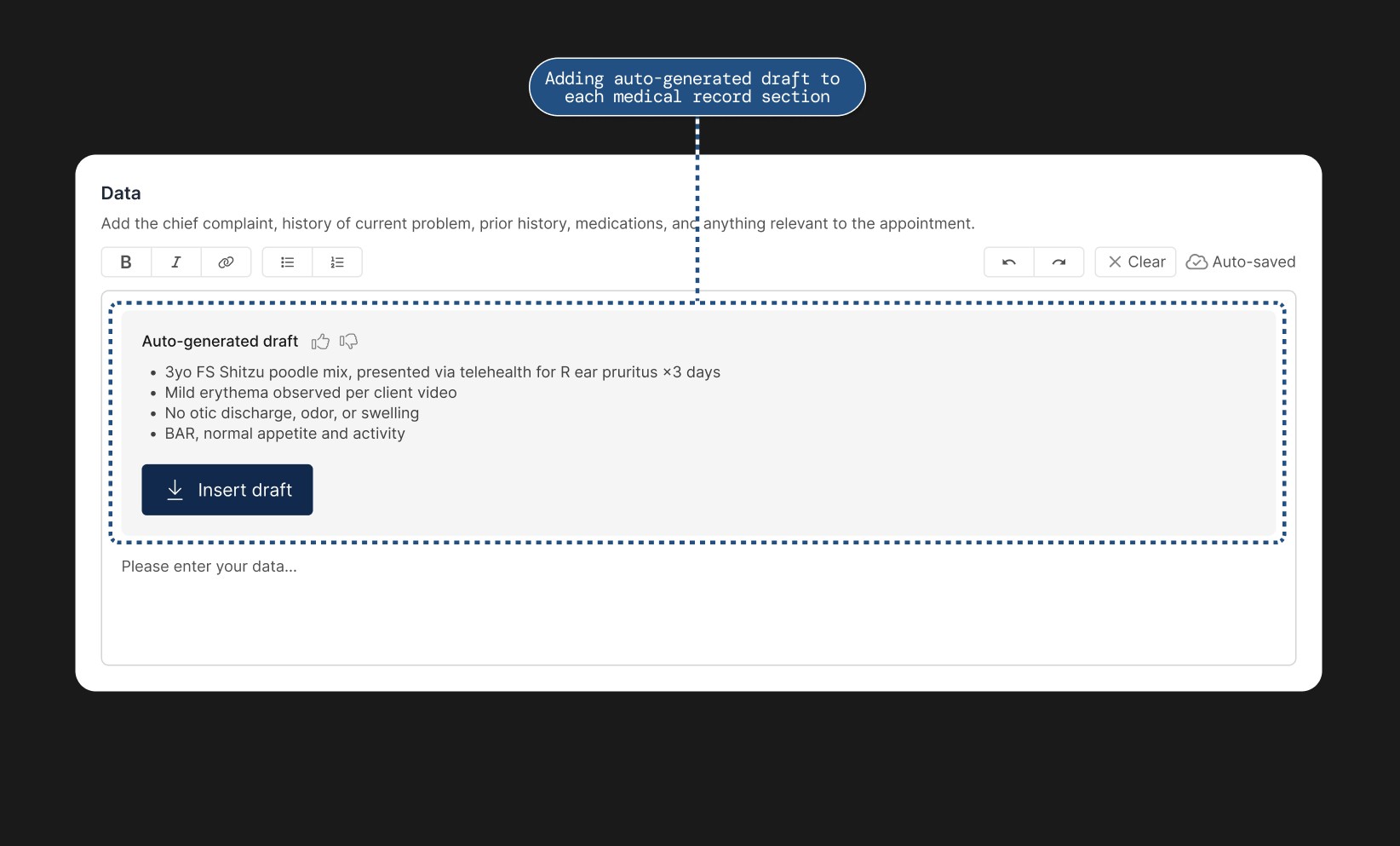
Through competitor analysis of similar features and conversations with veterinarians, we learned that generating a single long draft or inserting content directly into text fields created friction. Instead, we designed auto generated drafts for each section, allowing veterinarians to review, edit, and insert only what they need. These drafts appear within each text field, making it easy for veterinarians to compare generated content with what they have already written or still need to complete. This approach also established a strong foundation for future enhancements, such as regenerating drafts at a section level and incorporating additional data sources beyond appointment transcripts.
Format settings and refenerate
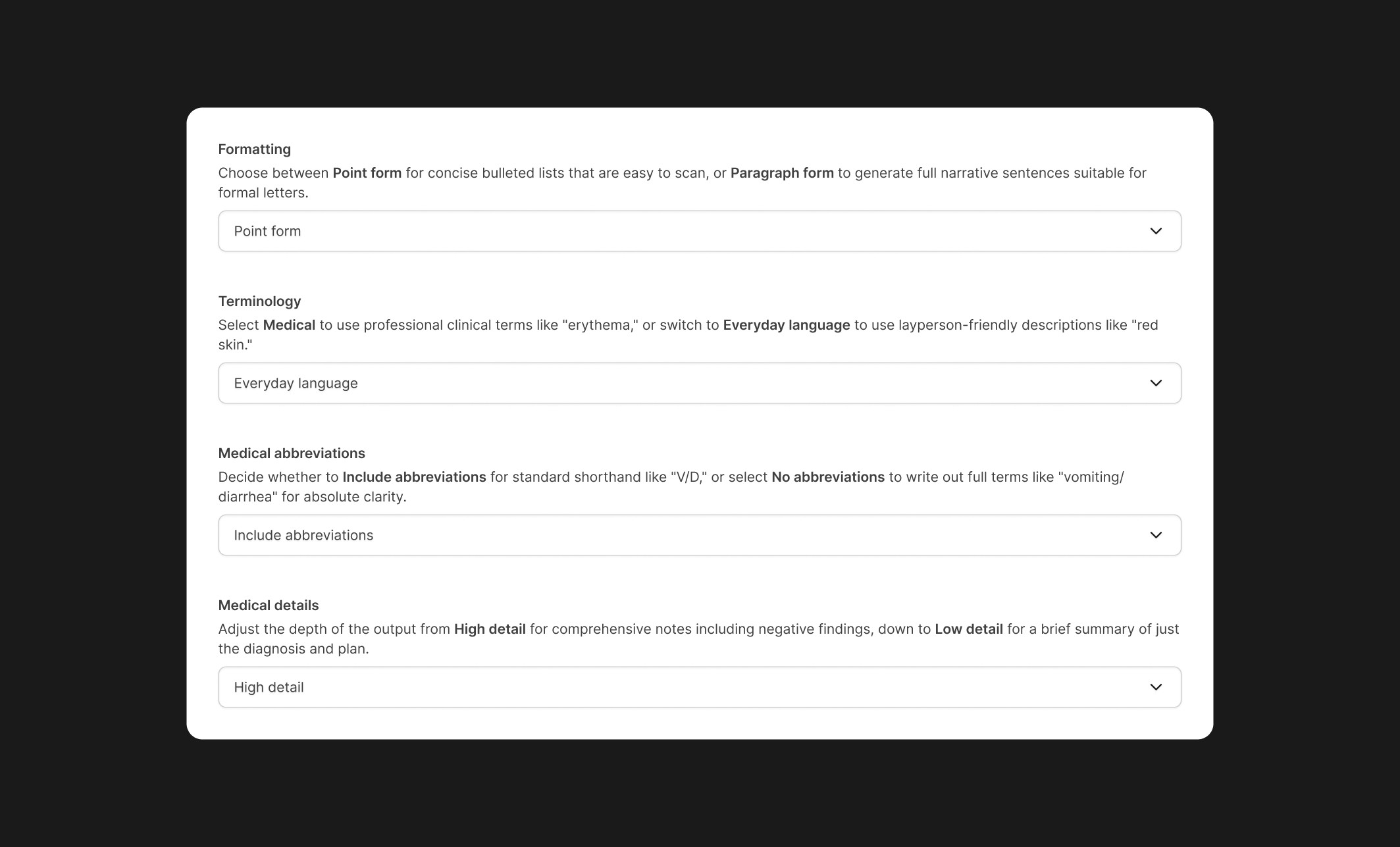
For each appointment, veterinarians can regenerate the draft up to two times if the initial version does not meet their needs. We also introduced format settings that allow vets to choose between point form or paragraph form, with or without abbreviations, everyday language or medical terminology, and varying levels of detail. This flexibility supports different documentation styles across veterinarians.
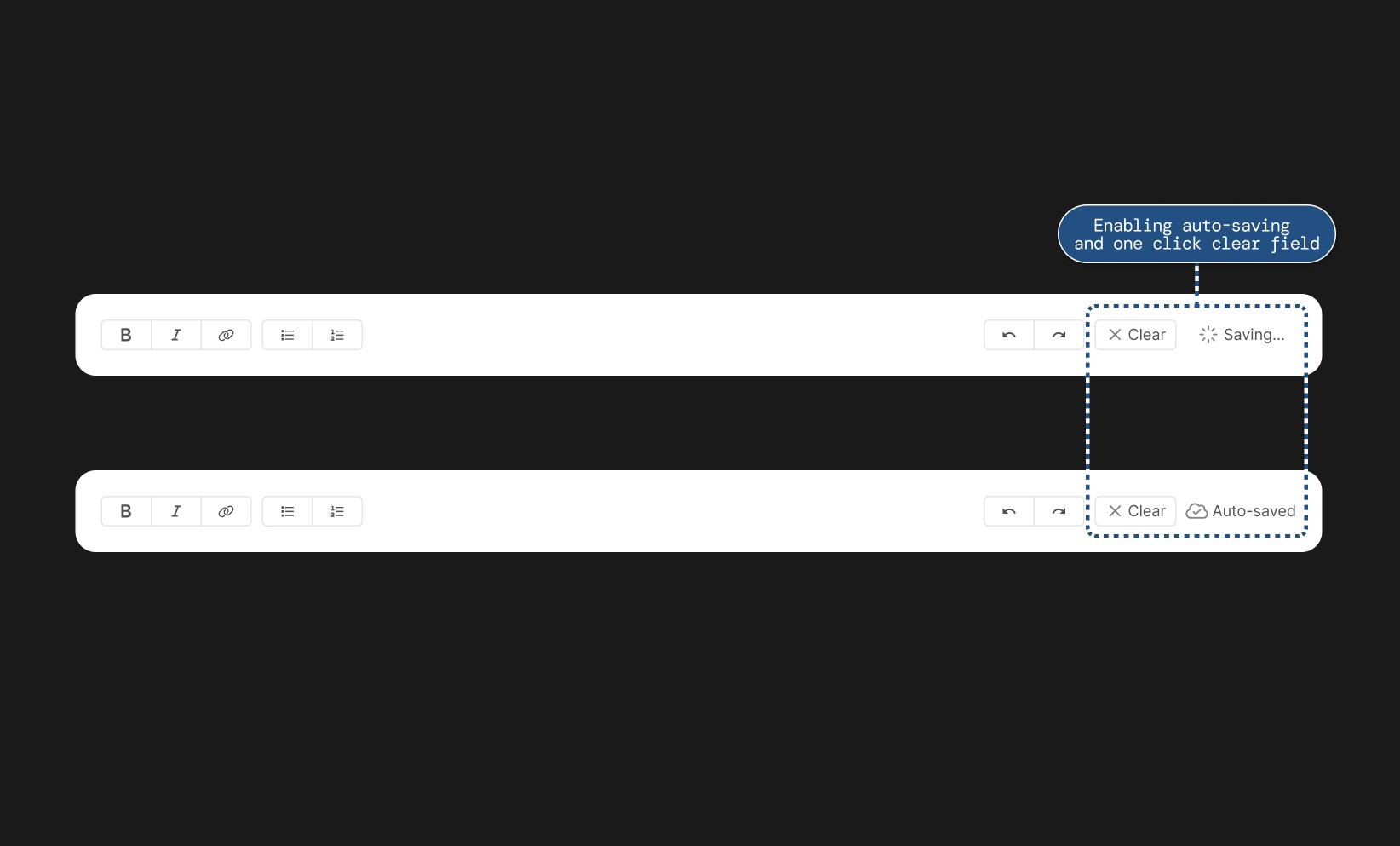
Auto-saved feature
From conversations with veterinarians, we identified a common friction point: drafts were often lost when a tab was accidentally closed before auto saving occurred. To address this, we introduced automatic saving and a clear draft action that gives veterinarians more confidence and tolerance while drafting medical records.